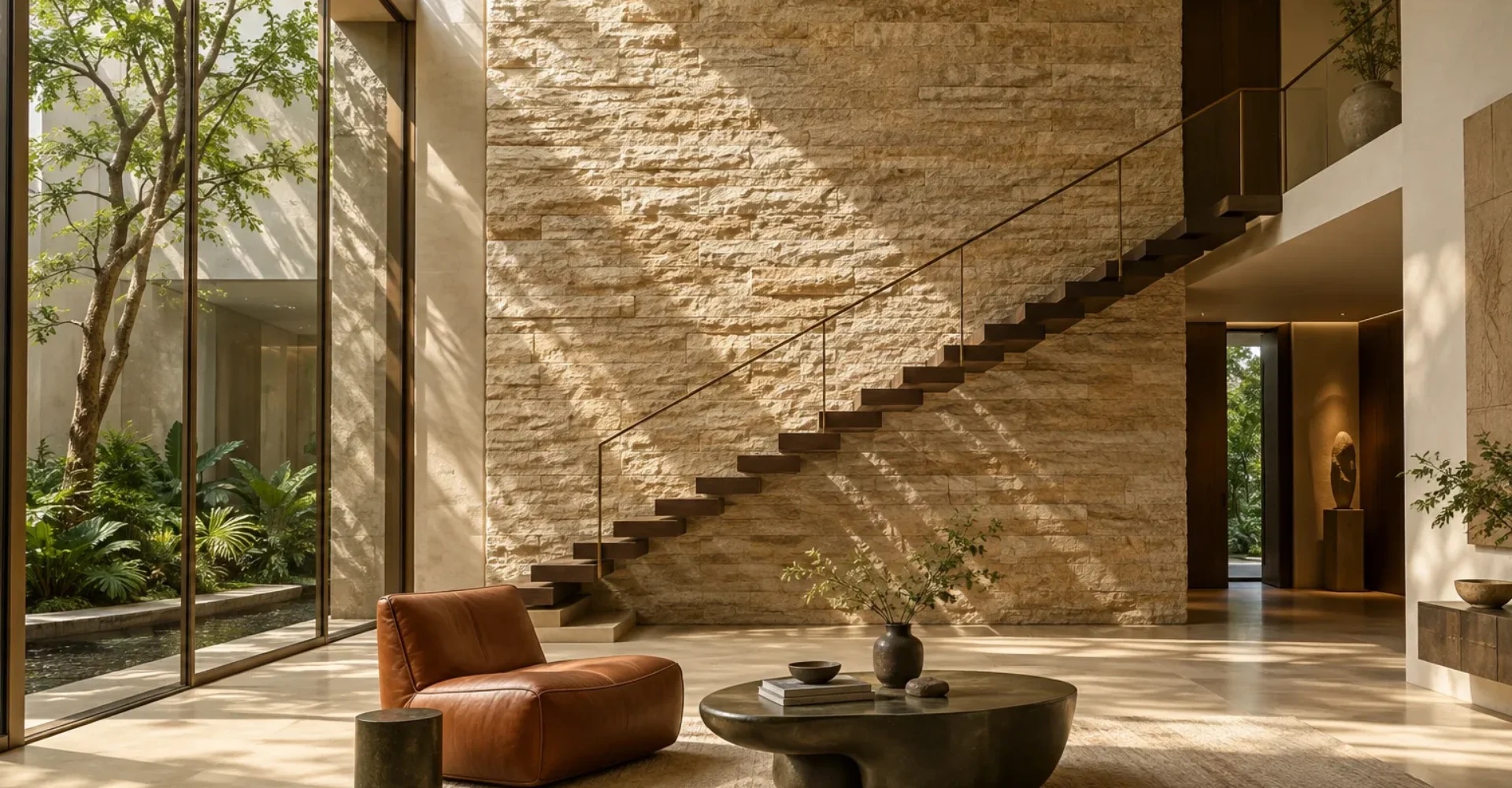
A stone wall can change the character of a room without changing its layout. It introduces texture, catches light, and gives an otherwise plain surface a sense of depth.
The strongest designs use stone with a clear purpose. Its colour, pattern, and placement should connect with the surrounding architecture, whether it frames an entrance, anchors a living room, or brings definition to an exterior elevation.
Here are seven stone wall design ideas to consider for a modern home.
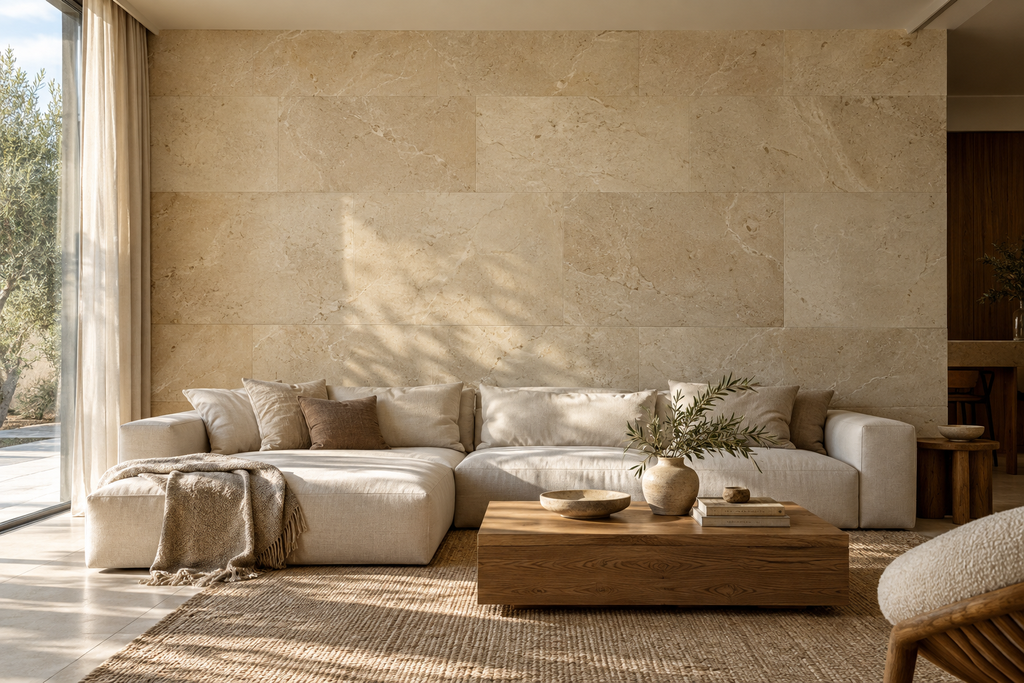
A living room feature wall does not need dramatic colour or heavy texture to make an impression.
Honed stone with subtle variation can create a calm backdrop for furniture, artwork, and lighting. Its subdued surface works particularly well where the room already includes expressive materials or strong colours.
Consider warm beige, soft grey, or other tones that complement the flooring and furnishings. Review the actual stone samples together with those materials before making a final choice.
Design tip: Keep the panel layout simple. Carefully positioned joints can give the wall an orderly appearance without competing with the rest of the room.

Stone with pronounced veining can become the central visual feature of a space.
Rather than treating each panel separately, plan how the pattern will move across the wall. Depending on the material and available slabs, panels may be arranged to create continuity or a mirrored composition.
A bookmatched arrangement uses suitably cut adjoining pieces to produce a mirrored pattern. Its success depends on slab selection and careful fabrication, so it should be discussed before ordering.
This approach can suit a living room, entrance lobby, or dining area where the wall has enough visual space around it.
Design tip: Keep nearby finishes restrained so the stone’s pattern remains easy to appreciate.

An entrance wall helps establish the home’s architectural character.
Textured stone can introduce depth through small changes in surface level and shadow. It may work well beside a clean-lined door, simple paving, and understated landscape planting.
The texture should suit the scale of the entrance. A deeply pronounced surface may feel appropriate across a broad wall but overpower a narrow passage.
For an exterior entrance, select the material and finish with weather exposure and cleaning requirements in mind.
Design tip: Test lighting against a sample. Light directed across the surface can emphasise texture much more strongly than frontal lighting.

Stone can give a television wall a more deliberate relationship with the room.
The design might use one continuous stone surface, a central panel with shelving on either side, or a combination of stone and timber.
Plan the practical details early. Power points, cable routes, ventilation, and access to equipment should be resolved before installation. A heavy stone finish also needs an appropriate backing and fixing arrangement.
Highly reflective stone may catch distracting reflections, so review the finish from the main seating position.
Design tip: Coordinate the stone joints with the television, cabinetry, and shelves to avoid awkward cuts.
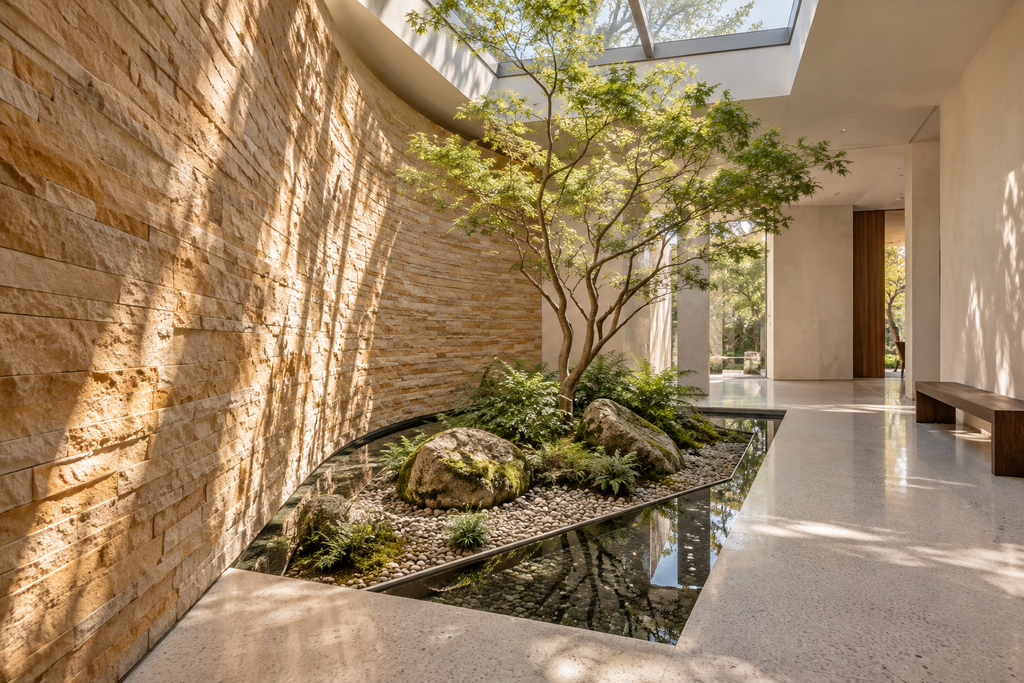
Stone can create a natural connection between a home’s interior and a courtyard or garden.
Its texture works alongside planting, while its colour can relate to paving and other outdoor materials. A wall visible through a large window can also become part of the interior composition.
Consider how rain, irrigation, and nearby vegetation may affect the surface. Water management and access for cleaning should be included in the design.
If the wall continues between indoor and outdoor areas, confirm that the chosen material suits both environments.
Design tip: Use a consistent material palette, while allowing the installation details to respond to each location.
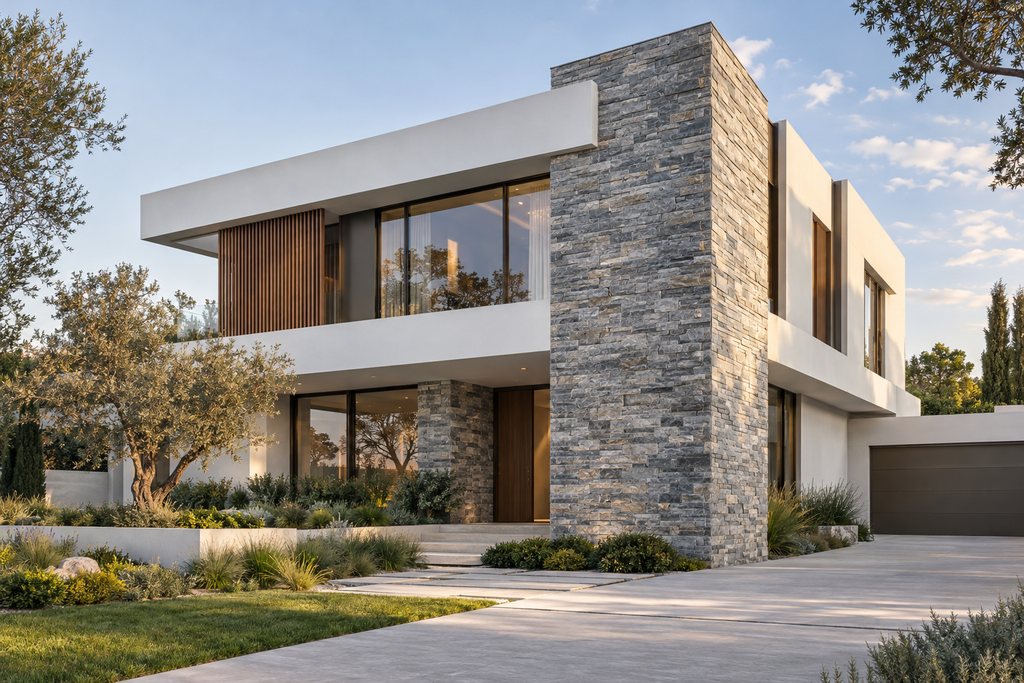
An exterior does not need to be entirely clad in stone to benefit from it.
A selected stone surface can highlight the entrance, define a vertical section, or connect two parts of the building. Its placement should follow the architecture rather than appear as a decorative patch.
Think about the facade from different distances. Fine texture may be visible up close but less noticeable from the street. Panel proportions, colour, and overall placement remain important at a larger scale.
The stone, fixing system, joints, and surrounding interfaces should be developed together.
Design tip: Align stone boundaries with meaningful features such as openings, corners, or changes in building form.
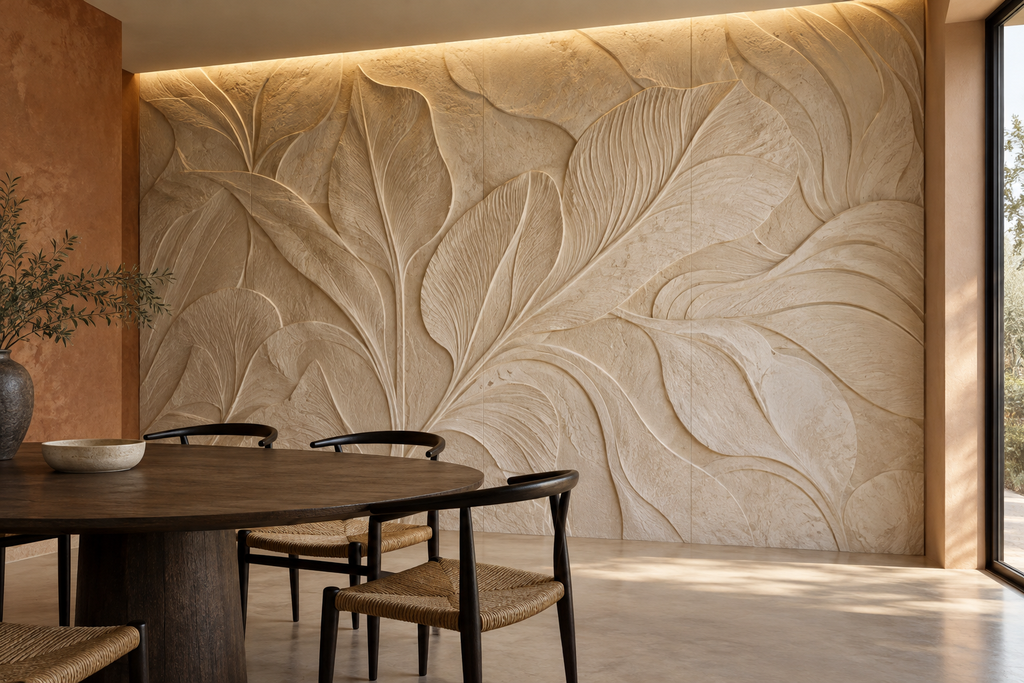
A custom stone relief can give a home a distinctive feature rooted in its architecture or the owner’s interests.
The design might be geometric, botanical, or abstract. It could occupy an entrance wall, a courtyard, or a selected interior surface.
Scale matters. The depth of the carving, viewing distance, lighting, and surrounding space all affect how the finished work is experienced.
Specialist detailing is also important. The artwork’s weight, support, connections, and installation access need to be considered alongside its visual design.
Design tip: Review a drawing or physical sample under the proposed lighting before committing to the full piece.
The best stone wall is one that belongs in its setting. Before choosing a design, consider the following:
| Consideration | What to Assess |
|---|---|
| Location | Interior or exterior conditions, exposure, and access |
| Scale | Wall dimensions, viewing distance, and panel proportions |
| Material | Colour, natural variation, and suitability for the application |
| Finish | Reflection, texture, and the effect of lighting |
| Installation | Backing, fixing requirements, joints, and edge details |
| Maintenance | Cleaning methods and long-term access |
Avoid choosing from a photograph alone. Images can suggest a direction, but samples reveal the actual colour, texture, and variation of the stone.
Joint placement affects the wall’s rhythm. Coordinate it with doors, windows, cabinetry, and other fixed features.
Corners, exposed ends, and transitions to plaster or timber need a clear detail. These small areas often determine how refined the installation looks.
Differences in grain, shade, and pattern are part of natural stone. Agree on acceptable variation and review the layout before installation.
Lighting should be considered while selecting the finish. It can soften a surface, exaggerate texture, or introduce reflections.
Stone often works best when surrounding materials give it room to stand out. Consider the whole space rather than the feature wall in isolation.
RockWallX provides interior and exterior stone installation, stone cladding, custom detailing, and mural and sculpture work.
Working with architects, consultants, and clients, the team focuses on translating design intent into precisely executed stone surfaces.
For project enquiries, contact info@rockwallx.com.
A restrained pattern, modest texture, and carefully planned panel layout can help the wall feel balanced. Review the design alongside the room’s lighting and furnishings.
Yes, provided the backing and fixing arrangement are suitable. Cable routes, equipment access, and mounting requirements should be planned before installation.
Sometimes, but suitability must be checked for both applications. Exterior exposure may require different material selection, detailing, or maintenance.
Bookmatching arranges suitably cut adjoining stone pieces to create a mirrored pattern. The result depends on the material, slab availability, and fabrication.
Yes. Texture can retain dust or dirt in recesses. Use cleaning methods appropriate to the specific stone and finish.
A well-designed stone wall brings the material, the room, and the architecture into conversation. Its impact comes from considered placement, proportion, and detail.
Choose the idea that suits your home, then develop the material selection and installation around it. That is how an attractive concept becomes a convincing finished space.