Two surfaces cut from the same stone can look remarkably different. One may reflect light and reveal rich colour. Another may appear soft and understated. A third may have a pronounced texture that changes throughout the day.
The difference comes from the finish.
A stone finish influences more than appearance. It affects how a surface feels, how it responds to light, and how easily it can be cleaned. Understanding those differences helps you choose a finish that suits both the architectural design and the intended application.
A stone finish is the surface treatment applied during processing. Depending on the material, the surface may be ground, polished, brushed, heated, or mechanically textured.
These treatments change the exposed face of the stone. They do not replace the need to assess the material’s strength, durability, or suitability for a particular project.
Polished, honed, and flamed are three common finishes, each offering a distinct appearance.
A polished finish is created through progressively finer abrasive processing. The result is a smooth, reflective surface.
Polishing often makes the stone’s colour, grain, and veining appear more pronounced. This can give marble or granite a strong visual presence, particularly under carefully positioned lighting.
Polished stone can suit:
For exterior applications, the particular stone and expected exposure need assessment. An attractive polished sample does not establish how the surface will look after years outdoors.
Reflection is part of the design. A highly polished wall may catch light from windows or fixtures in ways that affect the room’s appearance.
Marks, surface wear, and changes in sheen may also be more noticeable on some polished materials. Maintenance methods should suit the stone rather than simply aim to restore shine.
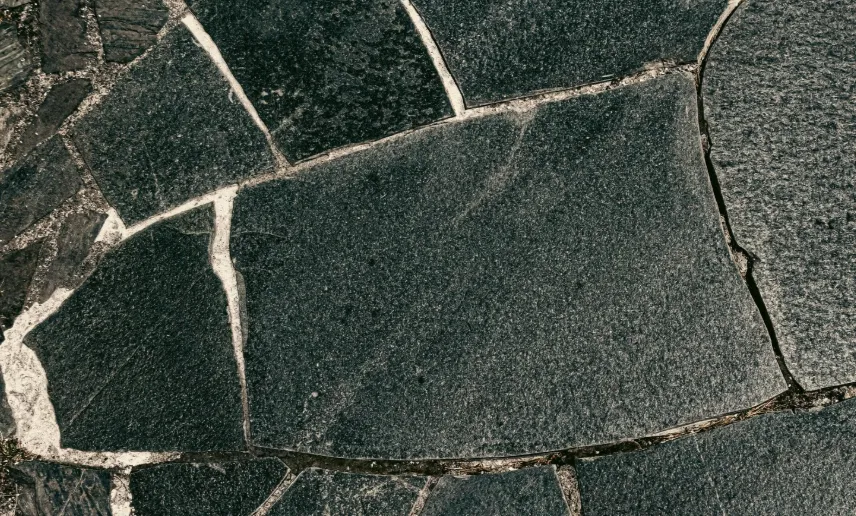
A honed finish produces a smooth surface with limited reflection. Its appearance can range from matte to a gentle sheen, depending on the stone and processing specification.
Compared with a polished surface, honed stone often presents colour and pattern more quietly. It can create a restrained background that allows the building’s form and proportions to stand out.
Honed stone can suit:
Its suitability still depends on the specific material and project conditions.
“Honed” does not describe one identical result across all suppliers. The degree of sheen and visible processing marks can vary.
Approve representative samples and agree on the expected finish before ordering. This is particularly useful where panels will sit beside one another under strong lighting.
A matte appearance also does not mean the stone is stain-proof or maintenance-free.
A flamed finish is produced by applying controlled heat to suitable stone, creating a textured surface.
It is commonly associated with certain granites. Not every stone can be flamed successfully, and the result varies with its composition.
The surface generally has limited reflection and a more pronounced texture than polished or honed stone.
Where the material is suitable, flamed stone can be considered for:
It is also used in some paving applications, although suitability for walking surfaces must be assessed separately.
Flaming can change the apparent colour of the stone. Review a sample with the actual finish rather than choosing from a polished sample of the same material.
For flooring or paving, texture alone should not be treated as proof of slip resistance. The proposed surface needs assessment under its intended conditions.
| Feature | Polished | Honed | Flamed |
|---|---|---|---|
| Appearance | Glossy and reflective | Matte or softly lustrous | Textured and generally non-reflective |
| Surface feel | Smooth | Smooth | Rougher and more pronounced |
| Visual effect | Emphasises colour and pattern | Presents the stone more subtly | Adds texture and shadow |
| Material compatibility | Depends on the stone | Depends on the stone | Limited to suitable varieties |
| Main design consideration | Reflection and visible sheen | Finish consistency | Texture and colour changes |
These are general characteristics. The approved sample should define the result expected for your project.
An interior wall, an exposed facade, and an entrance floor have different requirements.
For walls, consider appearance, cleaning access, weather exposure, and compatibility with the facade design. For walking surfaces, additional factors include wear and assessed slip resistance.
Lighting can change how a finish is perceived.
Polished stone reflects its surroundings. Honed stone usually produces softer reflections. Textured stone creates small shadows that become more visible under light falling across the surface.
View samples in conditions similar to the finished space.
A reflective finish may suit a formal reception area. A honed finish may support a quieter residential design. A textured finish may bring depth to an exterior elevation.
The finish should work with the building’s materials and proportions. A strong texture on a small sample may feel much more dominant across an entire wall.
Smooth and textured surfaces require different approaches, but neither is automatically easy to maintain.
Pronounced texture can retain dirt in surface recesses. Reflective surfaces may make certain marks more apparent. Stone composition, exposure, and detailing also influence cleaning requirements.
Obtain maintenance guidance for the specific stone and finish.
Small samples are useful for initial selection. Larger samples or a mock-up provide a better basis for judging variation, lighting, joints, and overall appearance.
Where finishes are combined, review them together before fabrication begins.
Yes. Different finishes can introduce contrast while maintaining a consistent material palette.
For example, a honed wall may be paired with a polished detail, or a textured exterior surface may sit beside smoother stone around an entrance.
The transitions need careful planning. Agree on edge treatments, panel layout, and acceptable colour differences so the combination feels deliberate.
RockWallX provides stone installation and custom detailing for architectural projects. Working with architects, consultants, and developers, the team helps bring specified stone surfaces together through precise execution and attention to the finished details.
To discuss your stone cladding or facade requirements, contact info@rockwallx.com.
Polishing often makes colour appear richer or darker than a honed or textured finish. The effect varies by stone, so compare finished samples of the actual material.
No. Honed stone is generally smooth. Its main distinction is reduced reflection compared with a polished finish.
Flaming is not appropriate for every material and is commonly used on suitable granites. Confirm available treatments with the stone supplier rather than assuming marble can be flamed.
Yes. A polished finish still requires cleaning and care appropriate to the stone. The finish does not make it immune to staining, scratching, or surface damage.
There is no universal answer. Select the finish alongside the particular stone, exposure conditions, architectural design, and maintenance requirements.
A finish changes how stone becomes part of a building. Reflection can emphasise pattern, a matte surface can soften it, and texture can create depth.
Choose by looking at the complete application. The right finish is one that suits the stone, supports the design, and can be maintained throughout its use.